
Reading Weather Signs in the Country: A Cloud and Wind Primer
The wind swung east before dawn, and the old mare was standing with her tail to it, head down. By mid-morning the sky had gone the color of a nickel and rain was drumming the barn roof. Nobody told her. She read the morning and made her own call.
Most of us lost that habit somewhere along the way. Now we wake up, thumb a screen, and get a percentage. There's nothing wrong with the percentage — it's a fine piece of arithmetic. But it's arithmetic about a region, and you don't live in a region. You live in one field, under one ridge, at the end of one gravel road where the fog sits until nine in the morning. A phone forecast covers a region; the sky over your own hayfield covers your hayfield. Reading it takes practice, a few landmarks, and the habit of looking up.
Start With the Ground You Stand On
Weather is local in ways forecasts can't quite capture. A ridge two miles west wrings rain out of a system before it reaches you. A creek bottom frosts three weeks before the higher ground does. A north-facing hollow holds cold air like a bucket, and on a still October morning you can walk from the truck down to the barn and drop six degrees on the way.
So learn your own patch first. Not the county — your patch. Answer a few questions about it, and answer them honestly:
- Which direction do the big storms usually arrive from, and which direction do the small, sneaky ones come from?
- Where does fog form earliest, and where does it burn off last?
- Which tree line makes the wind do something strange in your yard?
- Where does the ground stay wet two days after everywhere else has dried out?
Those patterns repeat. The puddle lands in the same low spot every spring. The same doe stands in the same corner of the alfalfa. Once you know your patch, you have a baseline — and you can't notice "different" until you know "normal." Every other sign you read gets more useful on top of it.
Clouds: Shape, Height, and Whether They're Growing
If you learn only one thing about clouds, learn this: height tells you what kind of weather is next, and shape tells you how hard it's going to hit. The rest is detail.
Flat and Low
Stratus is the grey blanket that sits on the ridge and does nothing in particular — mist, drizzle, a day that never quite decides. Nimbostratus is the same blanket, darker and thicker, with steady rain falling out of it that can last from breakfast to dark. Good weather for fixing fence. Bad weather for hay.
Cumulus and the Flat Bottom
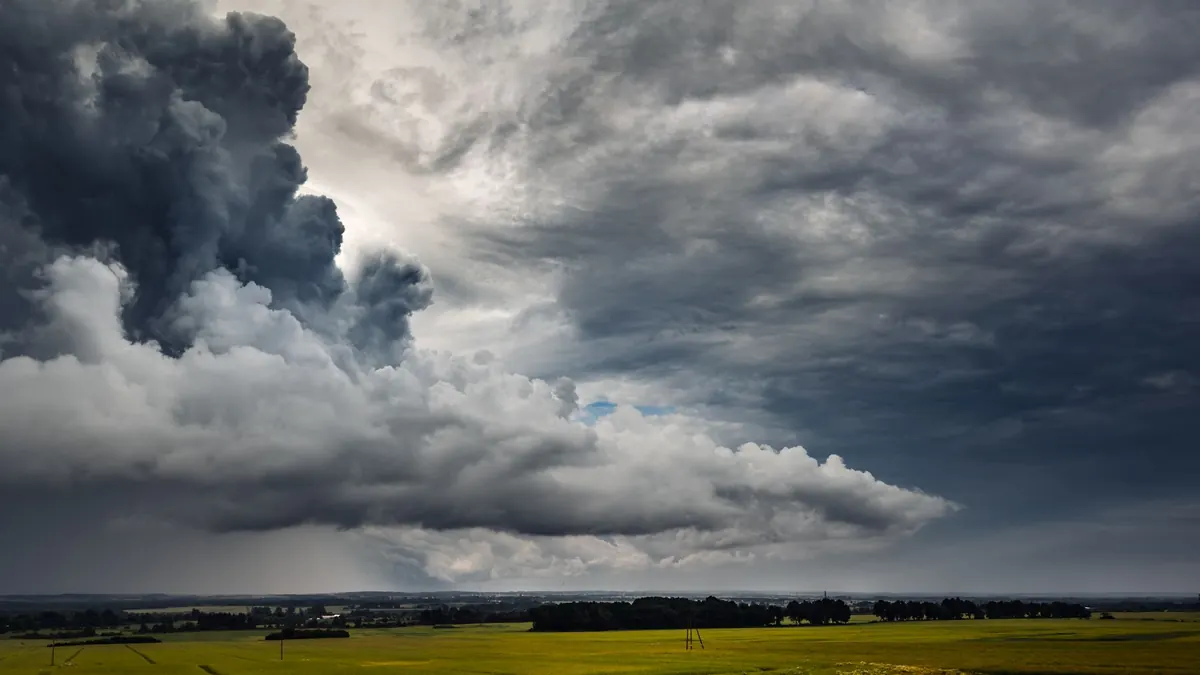
Fair-weather cumulus are the puffy ones with flat bases, drifting like sheep. That flat bottom isn't an accident: it marks the height where rising air finally cools to its dew point. As long as the puffs stay small and separate, you've got time to finish what you started. When they start widening at the base and stacking upward — tower on tower, cauliflower on cauliflower — that's cumulus congestus, and the sky is drawing fuel. Watch it for twenty minutes. If it's bigger at the end of twenty minutes than at the start, take it seriously.
The Anvil
When the top of a towering cloud flattens and spreads, you're looking at a cumulonimbus. That anvil means the storm has hit the ceiling of the troposphere and is now mature. Expect heavy rain, hail, and a hard gust of wind out ahead of it. A dark, low, wedge-shaped shelf cloud rolling toward you under a greenish sky is the sky's way of saying get in the house.
High Clouds Come First
Thin, wispy cirrus high up — the ones that look like a horse's tail — often show up a day ahead of a system. Cirrostratus, which thins the sun to a milky disc and gives the moon a ring, is the next step. A halo around the moon is a common sign of rain within a day or so, because it means a thick layer of ice crystals has moved in overhead.
Mare's tails and mackerel sky, never long wet and never long dry.
The old rhyme is roughly right. High, streaky clouds mean change is coming; a mackerel sky — rippled altocumulus, like fish scales — usually means the change is close but not yet arrived.
The Odd Ones Worth Knowing
Lens-shaped lenticular clouds parked over a ridge mean strong wind aloft and turbulence. Mammatus — the pouch-like bubbles hanging under an anvil — usually appears after the worst has passed, though it makes a fine photograph and a nervous horse.
Wind: Direction, Shift, and What It Carries
The wind is the messenger, and the message is usually about pressure. Where it comes from tells you where the air is coming from; how it shifts tells you where the weather is going.
The Shift Is the Story
Across most of the middle latitudes, weather systems travel roughly west to east. That means the wind ahead of an approaching low often comes out of the east or northeast, then swings south, then finally west as the front passes and the sky clears. A steady east wind that holds all morning is a strong hint that wet weather is on the way within a day.
When the wind backs and the glass falls, get the hay in before it squalls.
Here's a trick worth carrying in your head: stand with your back to the wind in the Northern Hemisphere, and lower pressure lies on your left. Point your left arm out and you're pointing at the weather that's headed your direction. It isn't magic — it's geometry — but it works often enough to be useful when the phone has no signal.
What the Wind Carries
Watch what the wind brings with it. A sudden cool gust on a hot afternoon, dust lifted off the lane, the leaves flipping silver-side up — that's a gust front, running out ahead of a thunderstorm like a plow. Then comes an eerie calm, and then the rain. Smoke that rises straight and then flattens sideways tells you a layer of stable air has moved overhead. Smoke that falls is a sign of damp, heavy air.
The smell of the creek, the smell of the ground, sound carrying farther than usual — those are all signs of a moist, falling-pressure air mass. And don't judge the wind at the barn door. Step out into the open where you can feel what it's actually doing.
Animals, Smoke, and the Small Signs
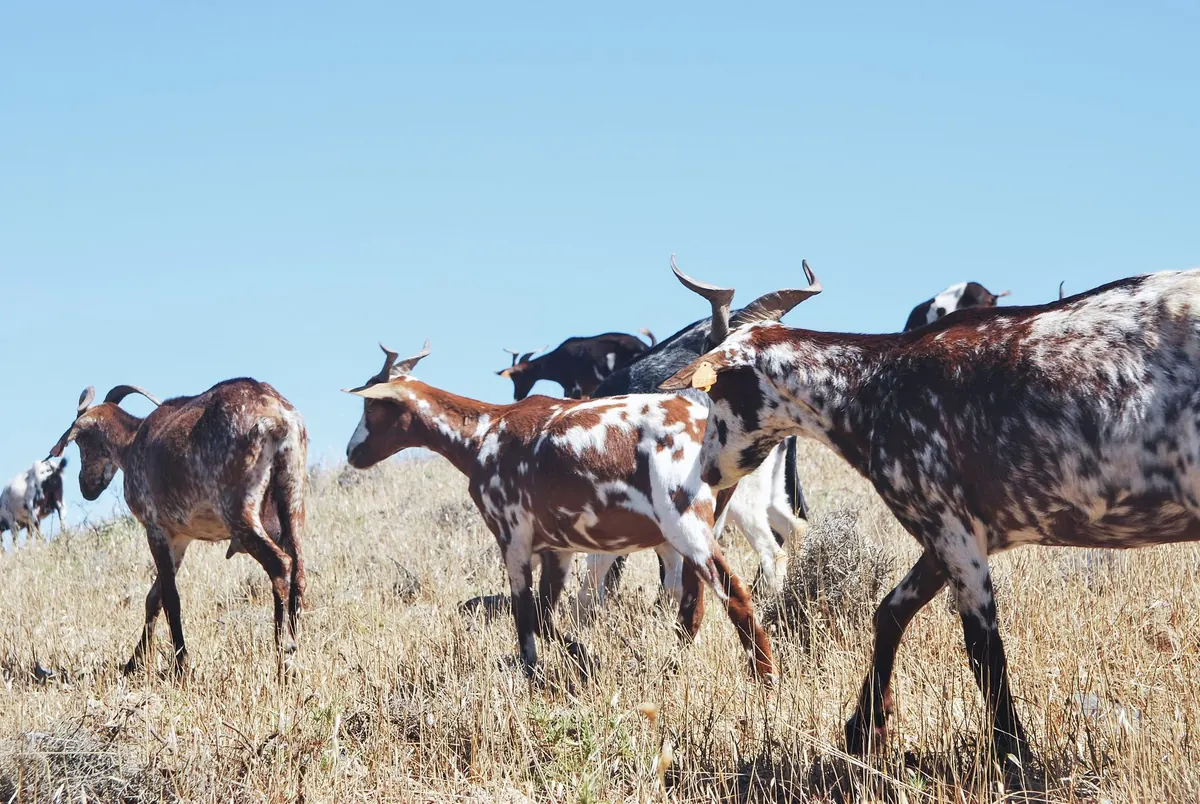
The mare that morning was reading two things at once: the direction of the wind and the pressure in the air. Cattle bunch and stand with their tails to a coming storm. Birds feed hard before bad weather, working the ground like they're behind schedule. Swallows fly low because the insects fly low because the air is heavy with moisture.
You can even count your way to a temperature. Crickets chirp faster in heat — count the chirps in fourteen seconds and add forty, and you'll land close to the temperature in Fahrenheit.
One honest caution: these are tendencies, not promises. A cow lying down in the pasture is probably just comfortable. A folk sign is a nudge, not a proof, and it should never talk you out of the forecast or into a bad decision about baling.
Keep a Small Weather Log
Instinct doesn't come from reading; it comes from watching and comparing. Fifteen minutes a day for one season will do more than a year of articles. A cheap notebook, a pencil, a rain gauge, and a barometer if you like.
- Write the date and the wind direction, and note whether it shifted since yesterday. Direction plus shift is most of the story.
- Name the clouds by height and shape, and say whether they're growing or shrinking. "Cumulus, small, holding" is a perfectly good entry.
- Record the feel of things: dew on the grass, smoke, the mare's tail, birds, how far sound is carrying.
- At supper, write down what actually happened. Then compare it with what you expected.
After a season you'll have a personal almanac — a record of what your ridge does before rain and what it does before a dry spell. After two, you'll trust it more than a five-day graphic with a cartoon sun on it.
Use the Sky and the Forecast Together
None of this replaces a forecast. The sky can tell you what's coming in the next few hours, and often whether tomorrow leans wet or dry. It can't tell you about the system still nine hundred miles out over the ocean, and it won't warn you about a flood watch you need to know about.
So use each for what it's good at. The app for the week ahead and the big picture. Your eyes and your notebook for the next six hours — the ones that actually decide whether you mow, bale, spray, or put the horses in early.
The old mare never had a phone. She had a tail, a direction, and thirty years of paying attention. That's the whole trick, and it's still available to anyone willing to stand in the yard a minute longer than usual and look up.
Photo: Marek Piwnicki / Pexels