
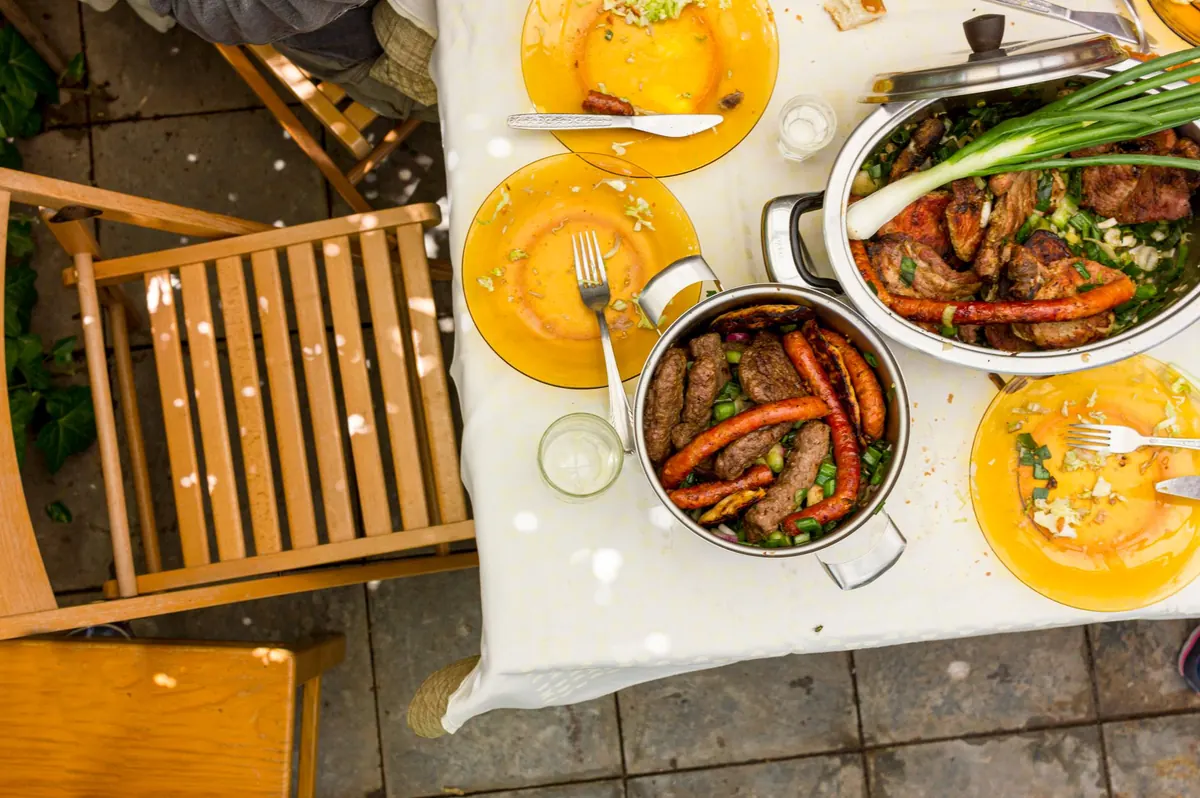
A farm stand potluck is a particular kind of evening. The stand itself is the excuse: tomatoes stacked in flats, a coffee can of ones and fives, sweet corn sweating in a cooler. By six o'clock the selling is done and the tables get pushed together, and what was a roadside business becomes the best-lit room in town. There is a casserole still in its baking dish, a jar of dilly beans somebody's grandmother put up, and four kinds of pie because four people each thought they were the only one bringing pie.
It works because the rules are simple. Bring a dish, bring a chair, stay a while. Most of the planning happens in the week before, and most of the trouble comes from the things nobody thought about: where the extension cords go, who owns a folding table, whether the ground is level enough for a slow cooker full of chili.
Pick a Date That Doesn't Fight the Harvest
Before you choose anything else, look at the calendar. County fair week is out. So is the first week of deer season in most places, and the night of the home football game, and the church supper that has been on the same Tuesday for forty years. You are not competing with those events; you are trying to land in the gap between them.
Late afternoon works better than evening. If the stand closes at five, start at five-thirty and let the light do the decorating. You get two hours of daylight for the food line and the talking, and the lanterns or string lights only have to handle the last part of the night. Pick a rain date and put it on the invitation. If you don't, you'll be standing under a tarp with forty people asking you what the plan is.
Find Out What Your Town Actually Requires
This is the part people skip, and it's the part that can ruin a good night. Rules for gatherings vary enormously depending on where you are, who's invited, and whether any money changes hands. In many places, a private potluck where guests bring their own food and nothing is sold is treated very differently from a public event with vendors. Don't assume your event falls on the easy side of that line — ask.
Start with your town clerk, and ask specifically about temporary food events, parking on a road shoulder, portable restrooms, and whether the fire marshal has an opinion about tents and generators. If the public is invited and food is being served to them, a call to the county health department is worth ten minutes of your time.
- Ask in writing if you can, and keep the replies. A printed email from the town office settles a lot of arguments later.
- Think about money. Selling plates, raffle tickets, or jars of jam can move your event into a different category entirely.
- Plan for parking before someone parks in the field and gets stuck.
- Restrooms matter. A rented portable unit or a neighbor's willingness to open a bathroom across the road — decide now, not at seven o'clock.
One sensible note: this is general advice, not legal advice. Requirements for food, permits, and events differ by state, county, and town, so confirm the specifics with your local officials before you print the flyer.
Invite the Growers First, Then Everyone Else
Send the first invitations to the people who make the stand worth visiting. The two farms up the road, the beekeeper, the woman with the old apple trees, the garden club, whoever runs the bakery counter on Saturdays. Ask them early and ask them specifically. "Bring something you grew or made" gets you a better table than "bring a side dish."
Keep a running list so you don't end up with nine pasta salads. A simple sign-up with categories — main dish, salad, bread, dessert, drinks — takes the guesswork out of it. Post a paper sign at the stand, put a notice on the post office board, and send one group text to the people who always show up. Three channels, one message.
What to tell guests
- Bring your own chair, and a jacket for after dark.
- Bring a serving spoon for your dish; forks don't work on potato salad.
- Write the ingredients on an index card if the dish has nuts, dairy, or gluten.
- Bring your dish in something you don't need back that night, or tape your name to the bottom.
- Park in the field, not on the shoulder, and leave room for the tractor.
Food Safety Without the Clipboard Energy
You can be relaxed and still keep people from getting sick. Two things do most of the work: shade and ice.
Cold dishes go in a cooler with actual ice, not a bowl of ice water that turns to soup in an hour. Hot dishes stay hot in slow cookers, insulated carriers, or chafing setups, plugged into a circuit you've already tested. As a general rule, perishable food shouldn't sit out more than two hours — one hour if it's very hot out — so put out smaller portions and refill from the cooler rather than setting out the whole bowl at once.
Give every dish its own serving utensil. Set up a handwashing station: a jug with a spigot, a bar of soap, paper towels, and a bucket underneath. Mesh covers or a sheet of screen over the table keeps flies off without making anyone feel like they're at a health inspection. If you're serving a large public crowd and you're not sure about handling something, your county health department or local extension office can answer the question quickly.
Set the Stand Up Like a Room
People linger when the space tells them to. Put the food along one side of a long table so the line moves in a single direction, with plates and utensils at the start. Set the drinks far from the food so nobody's reaching across the potato salad. Cluster chairs in loose circles instead of rows, and leave a clear path from the food to the seating.
Lighting is the difference between a party and a cleanup. Battery string lights along the stand's frame, a couple of solar lanterns on the tables, one flashlight in the trash area. Bring more trash bags than you think you need, plus a separate bin for cans if your town recycles. Bug spray, a water jug, and a roll of paper towels in reserve will handle ninety percent of what goes wrong.
If the weather turns
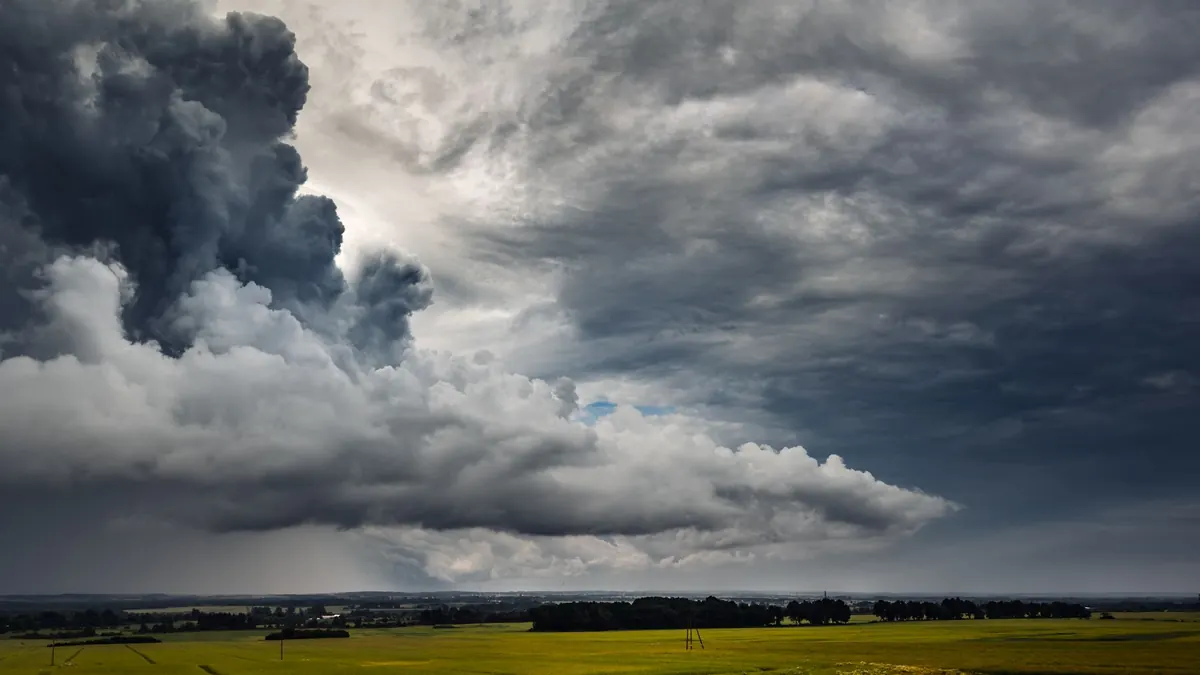
Have a plan that isn't wishful thinking. A pop-up tent with weights on the legs handles rain, and the stand's overhang handles sun. If wind is coming, be ready to move the food inside a truck bed with a topper or into the barn. Everything on that table should be something you can carry twenty yards in one trip.
Cleanup, Leftovers, and Doing It Again
Cleanup goes fast if you assign it. Two people on tables, one on trash, one on dishes that need returning. Wash down the folding tables before they go back in the barn, and set the lost-and-found — tongs, a serving spoon, one blue casserole lid — in a box by the stand door with a note.
Then write down what happened while you still remember. A note card taped inside the stand works fine: the date, how many came, what ran out, what you had too much of. Next year, you'll know to move the date off fair week and to tell only two people to bring dessert. And send one more invitation than you did this time — to the family that just bought the place at the end of the road, the one with the greenhouse nobody has met yet.
Photo: Nenad Delibos / Pexels