
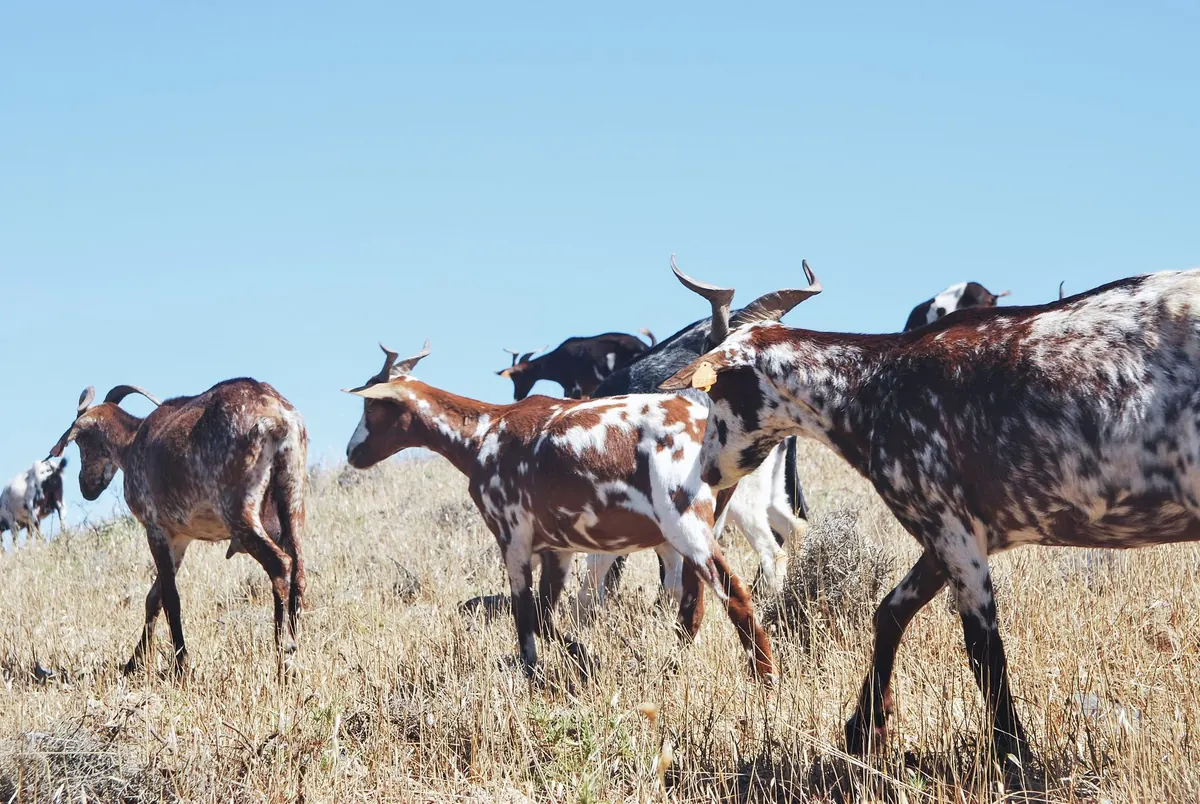
The first goat usually arrives with a name already chosen and a fence built in one Saturday afternoon. For a month, it works beautifully. Then the goat figures out the gate latch, the doe you bought turns out to be pregnant, and the friendly wether starts limping. Backyard goats are not difficult animals to keep, but they are specific ones. They fail in predictable ways, and nearly every one of those ways traces back to five decisions made in the first few weeks.
Mistake One: Fencing That Only Works in Theory
Goats are browsers built for brush, rock, and steep ground. They climb, they lean their full weight against a wire, and they squeeze through gaps that look impossible. A fence that keeps a horse or a dog content will often mean nothing to a determined goat.
Field fencing with large openings invites a goat to push its head through and get stuck; woven wire with small openings, or a combination of woven wire and a single strand of electric offset from the posts, holds far better. Four feet is the minimum height most people get away with, and five or six feet is safer. Barbed wire has no place around goats — it tears coats and hides without stopping them.
Before the animals arrive, walk the entire perimeter and check for these trouble spots:
- Gaps at the bottom. Goats push under fences. The bottom wire should sit at or just above ground level, with no dips where they can nose underneath.
- Loose gates. A slide bolt is a puzzle, not a barrier. Use a chain and snap through the gate and post, and check both sides of hinged gates.
- Weak corners. Braced wooden corners hold tension; T-posts alone bend over time. Space line posts close enough that the wire does not sag.
- Climbable objects. Hay bales, feed troughs, and old cars next to the fence become launch pads.
- Escaping browse. Branches hanging over the fence give goats a reason to lean and a ladder to climb.
Mistake Two: Feeding Them Like Sheep, or Like Pets
Goats are not small cows. They are browsers that prefer leaves, brambles, weeds, and woody growth over short pasture grass, and their rumens are built around roughage. The most common feeding errors are simple: restricting hay, overdoing grain, and using the wrong minerals.
Roughage first, always
Free-choice hay should be the foundation, with enough feeder space that the herd boss cannot guard the whole supply. Keep hay dry and off the ground. Moldy hay can make a goat seriously ill, and goats are pickier than most livestock about what they will eat from a soiled pile.
The copper problem
Goats need more copper than sheep, which is why sheep minerals are the wrong choice for a goat herd. Use a loose mineral formulated for goats, keep it out of the rain, and do not count on a mineral block. Loose minerals are easier for goats to consume in the amounts they need. For wethers and bucks, mineral balance matters especially, since urinary stones are a real risk in males on high-grain diets. Ask a veterinarian or your extension office for a ration that fits your animals and your hay.
Grain is a tool, not a staple
Grain is for milking does, growing kids, and thin animals — not for a pet wether standing in a small paddock. When you do change feed, do it over a week or more rather than overnight, and never dump lawn clippings, garden waste that may have been sprayed, or kitchen scraps into the pen. If an animal goes off feed, that is a veterinary conversation, not a wait-and-see.
Mistake Three: Bringing Home Just One
Goats are herd animals down to the bone. A single goat is a stressed goat, and stress shows up as fence-pushing, nonstop bleating, poor growth, and a tendency to get sick. Two is the minimum, and three is often calmer still.
Do not assume a chicken, a horse, or the family dog fills the role. They do not. If you want one milking doe for the household, buy her a wether as a companion — he eats less, needs no breeding, and gives her someone to sleep against. Introduce new animals slowly, with a fence between them for several days, and watch for bullying at the feeder.
Mistake Four: Hoof Trimming Left Until There's a Problem
Hooves grow continuously. On soft, muddy ground they wear down slowly, and in wet weather the folds beside the hoof can trap mud and debris. Most backyard goats need trimming every six to eight weeks, though rocky terrain and hard ground stretch that out, and some animals grow faster than others.
Watch for toes curling sideways, hooves growing past the sole so the goat walks on its heels, and a split or splayed shape. A goat that stands oddly or limps is telling you something. The basic routine looks like this:
- Work on a clean, flat surface and have someone hold the goat, or use a stanchion with feed in front of it.
- Lift a leg and brace it against your knee so the hoof faces up and the goat cannot yank it free.
- Use sharp hoof trimmers to nip away the overgrown wall in thin slices, working from heel to toe.
- Level the sole and trim the sides so the hoof is flat and the two toes sit evenly.
- Clean out the space between the toes and check for packed dirt, smell, or tenderness.
Cut in small increments. If you nick the quick and it bleeds, stop, let it clot, and keep the animal on clean, dry ground for a day or two. If a hoof is hot, swollen, or foul-smelling, or the goat refuses to bear weight, call a veterinarian rather than trimming deeper.
Mistake Five: Buying Before the Basics Are Ready
Goats handle cold better than wet. A three-sided shelter facing away from prevailing wind, dry bedding, and roughly ten square feet of covered space per adult goat will do more for their health than an insulated barn. Water matters just as much: a milking doe can drink several gallons a day, and frozen buckets cut intake fast. Plan for hauling warm water twice a day or invest in a heated bucket before the first hard freeze.
Find your veterinarian before you need one. Call the clinic and ask whether they see goats and whether they make farm calls. Keep a thermometer, hoof trimmers, and a way to catch and restrain an animal on hand. Talk to that vet about parasite control for your climate, because deworming on a calendar rather than on evidence is how resistance gets built on small farms.
A Slow Start Beats a Fast Fix
None of this is complicated, but all of it is easier to do before the goats arrive than after. Build a fence you would trust against a hungry animal, bring home two instead of one, put good hay and goat minerals in front of them, and pick up their feet every few weeks so trimming never becomes a wrestling match. Then spend the first season just watching. You will learn your herd's normal — how they move, how they eat, who bosses whom — and that ordinary knowledge is what tells you, quickly, when something is wrong.
For anything involving illness, lameness, breeding, or a diet change for a producing doe, get a veterinarian involved early. Good advice for your specific animals and your specific ground is worth more than any general guide.
Photo: Tiana / Pexels